
spain one
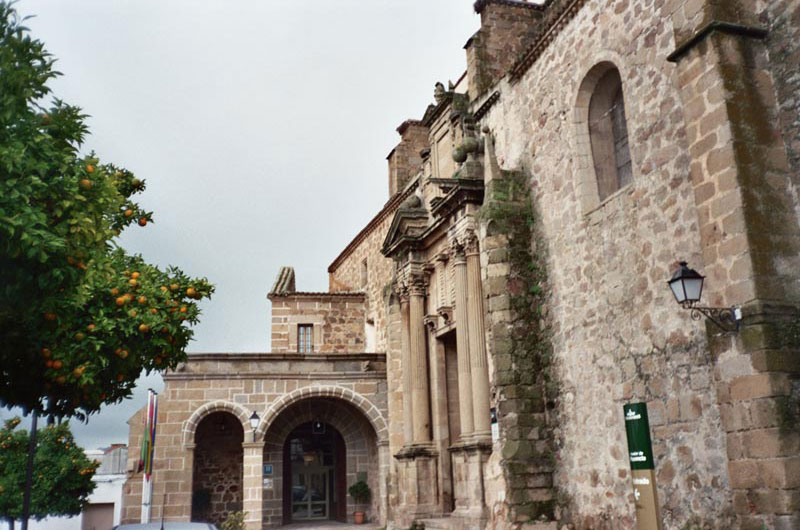
Lavera
Posted April 12, 2015 by Jan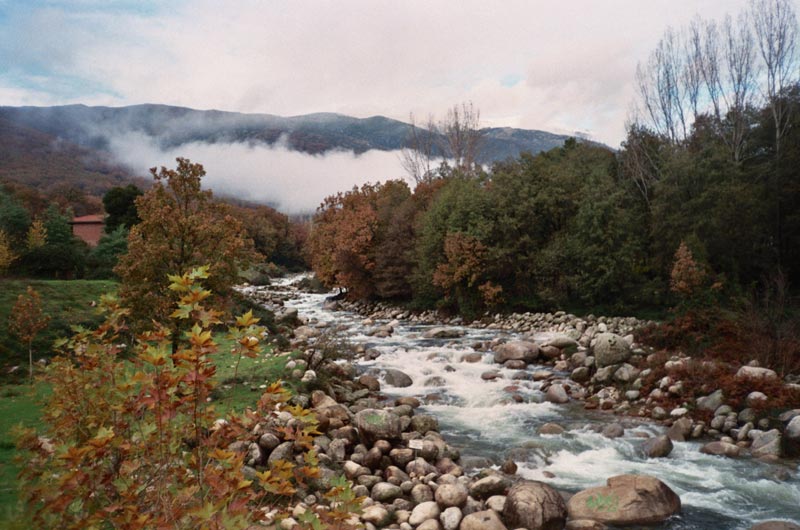
Merida
Posted April 12, 2015 by Jan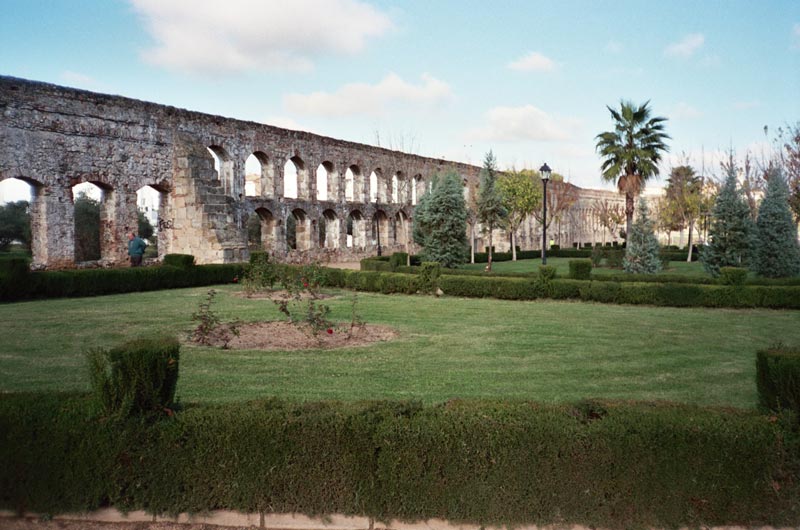
Extremadura: Cáceres to Salamanca
Posted July 30, 2026 by Jan
Aventura, Florida
December 3, 2002
Hello,
This past summer I read a travel article about Spain called “Extremadura, a land of rugged beauty.” My wife, Alice, and I had been to Spain twice before: Barcelona, Madrid, and Burgos in the summer of 1967. Then Seville in the spring of 1970. Now, on my own, Extremadura in the far west of Spain is enticing. So, I book a flight, a rental car, and my first night.
I arrive in Madrid on Friday morning, November 22, pick up the car, and head west to Extremadura—“a land of rugged beauty and the home of the conquistadors, Pizzaro and Cortés.” My destination is the city of Cáceres, a UNESCO World Heritage Site.
Got your atlas handy?
After a couple of stops along the way for lunch and souvenir hunting (the town of Talavera de la Reina is known for its pottery and tile work), I arrive at the Castillo de las Seguras in Cáceres.
Well, this rural castillo is truly a 15th-century castle. One night only, please! The heating is mostly the fireplace in the center hall. They do supply a small electric heater for the room, but I never warm up. The place is just too rustic, even for me. So I find a small hotel in the center of town for the next three nights.
The old city of Cáceres is excellent. Restored and maintained 14th–16th-century public buildings, churches, and palaces. An archaeological museum with artifacts and carvings dating back to the Romans and the Goths.
From Cáceres I make day trips to other cities:
Alcántara. Over the Río Tajo lies a high, graceful five-arch Roman bridge that has supported vehicular and foot traffic for more than 1,500 years.
Trujillo. A larger-than-life statue of Pizzaro on horseback. Another one stands in Lima, Peru.
Guadalupe. An extraordinary monastery, rich in treasure. Exquisite clerical robes, huge prayer books (100 pounds (45 k) each). The words and musical notation are clearly marked and illustrated. And two El Greco paintings!
Lunch that day is a leg of baby goat. They simply roast the entire leg, put it on a plate, hoof and all, and serve it with French fries.
My favorite day trip is to Mérida, south of Cáceres. Yes, the name is the same as the Mexican resort town and a city in Venezuela. Mérida is known for Roman ruins.
My sightseeing begins with a walk around and up and over a Roman aqueduct and a very large hippodrome. Next, across a Roman bridge over the Río Guadiana. Then up the hills of the city past the remains of a Temple to Diana.
Lunch is a light tomato soup with bread and eggs, followed by baked trout.
Best of all, the spectacular archaeological site of a Roman theatre and amphitheater sits side by side at the highest point of the city. The amphitheater is still in use, seats 14,000 spectators, and has perfect acoustics. Up front is a double layer of tall marble pillars with original carvings.
Sadly, I leave Cáceres and, in the pouring rain, drive north to Placencia. A "pleasant" city with a beautiful cathedral, a central square with shops and restaurants, surrounded by winding streets with more shops, and homes with small balconies. Come to think of it, all the cities I visit have this same layout.
In Placencia, I treat myself to a night at a Parador. Paradores throughout Spain are old castles converted to luxury hotels. As I stroll the ancient passageways, staircases, and public areas, I am truly following in the footsteps of royalty.
The guest rooms, actually small suites, stock every amenity. The restaurants are in the old dining halls or chapels. Everywhere are works of stone and carved archways. A castle! Built for luxury and security. I could stay a month.
The meals in the Parador are graciously served. For lunch, I have veal stew as good as my mother used to make. For dinner, roasted vegetables and a platter of local cheese with the regional crunchy bread. Local wine.
The next morning, the breakfast buffet has everything! Including my favorite: tiny almond pastries with café con leche. Of course, café in Spain is espresso with hot milk. So classic. So civilized.
I am sad/glad to leave the Parador. If I stay a month, I will gain 10 kilos.
I continue north toward Salamanca, the city that motivated my trip in the first place. On the way, two detours.
First to an area called La Vera. A string of quaint villages surrounded by snow-capped mountains. I buy more terra-cotta, hand-painted dishes.
The second detour is Hervás. A small town noted for the ancient, now restored Barrio Judeo. I find Stars of David in the grillwork of doorways. Large cobblestone Stars of David are inlaid in the pavement at the entrance to the Barrio.
Salamanca is splendid. A golden city built with a locally tinted stone. All the public buildings and the Cathedral glow in the sunlight and moonlight.
Since the freshly quarried stone is soft, the facades of the buildings are meticulously carved, as delicately as a silversmith’s work. The style is thus known as Plateresque—like silver. Eventually, the stone dries to become hard and durable.
The Plaza Mayor is grand and spectacular. Bells toll from atop the city hall.
The University of Salamanca is one of the oldest in Europe and ranks with the famous schools of Paris and London. International students come to study and to enjoy the culture.
I visit two museums: a collection of Columbian gold amulets and masks, and an exhibit of 19th-century Polish art, including a drawing and a painting of Chopin.
Salamanca is on my “To See Again” list.
But now, me voy a Madrid.
Hasta pronto,
Juan