Petroglyphs
Posted October 8, 2018 by Jan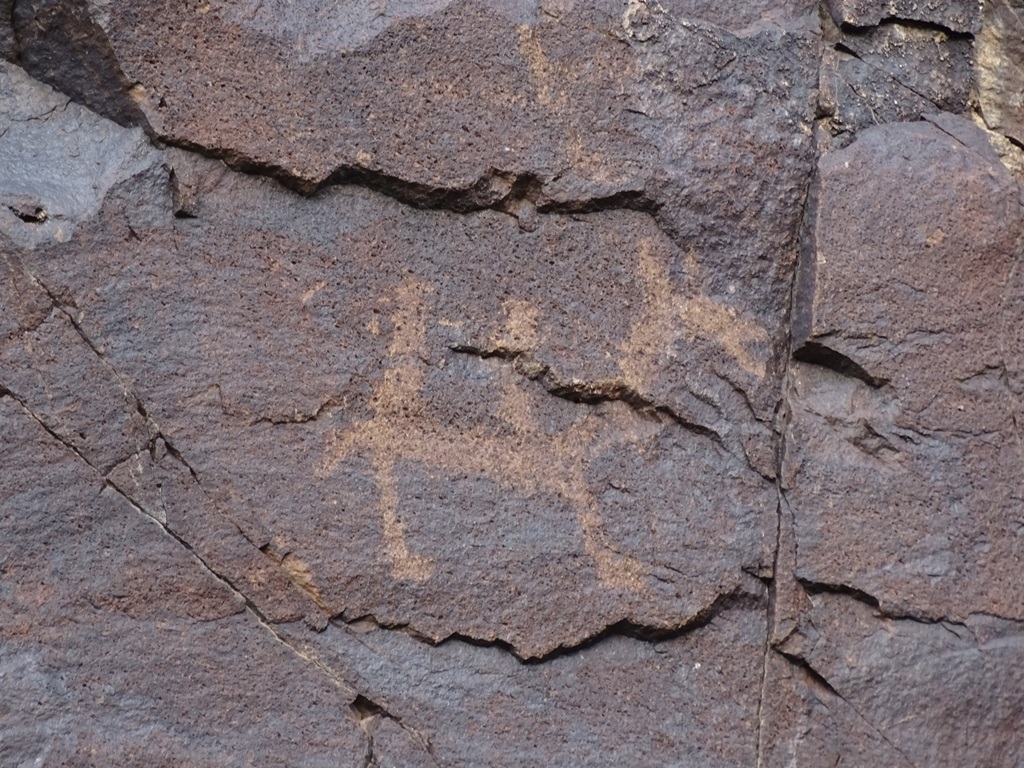
Taldykorgan
Almaty Region
Kazakhstan
October 8, 2018
Hello,
The visit to the Buddha Petroglyphs at Tamgaly-Tas is a long somewhat bumpy and sometimes gentle ride across the Steppe and then down into the gorge for a leisurely stroll along the riverbank. The setting is peaceful and picturesque: rugged cliffs to the left and the river on the right. In the grasslands on the opposite shore, horses graze unperturbed and indifferent to our presence.
Legend has it that a caravan was moving to the river when an earthquake dislodged huge boulders that rolled into the water forming a river crossing. The pilgrims took it as a blessing from the gods.
The central rock of Tamgaly-Tas has an image of Arya Avalokitesvara Bodhisattva, the subject of the famous Buddhist mantra “Om Mani Padme Hum.” The inscription says, “I worship the holy Avalokiteshvara.” Other 4m high (13 ft) Buddha figures and golden inscriptions adorn the huge flat boulders that overlook the river.
Finding the 4000-year-old petroglyphs site is quite a different challenge. The ride is long and bumpy across the Steppe and then up the rocky track into the mountains. My driver is determined to continue to climb. But I decide for us that the road is becoming dangerous for our vehicle. I hop out of my seat and climb on foot.
There are no indications of any sort that petroglyphs can be found here. I continue to climb. The landscape is splendid, but still there is no sign of any rock carvings. How high shall I climb? The path under foot seems unclear. And where do I look?
I stop to take photos of the mountains. I consider heading back to the driver and my ride. OK, no petroglyphs today. Yet I must consider the one brutal fact. At my age, will I ever return to this spot? I continue to search. I continue to climb. The narrowing path is more brush than dirt.
And then, success. My eye catches something and then something else and then something more. I must veer off the path. I must look for large flat rocks. Of course! Where else would an artist choose to leave his contribution to eternity?
Let’s not get too dramatic. But, really, I am standing on the very spot that four thousand years ago, some fellow decided to engrave the image of an antelope or a sheep on the very rock I can touch now.
I touch the rock with reverence.
Mind you, I have stood at many ancient sites before. But for the first time I get a real appreciation for the enormity of time. Can I assume that long ago, Neolithic man roamed here? And then groups of Stone Age men? And then Iron Age men? And the artists of the Bronze Age? Here on the very path I now tread?
For centuries upon centuries successful nomadic and pastoralist cultures herded and bred cattle and domesticated the horse and created tools of flint and then iron and then bronze. They mined copper and zinc.
And four thousand years ago, the artists among them announced to us that they are here. With us today. High in the mountains.
We just need to look.