Iberia

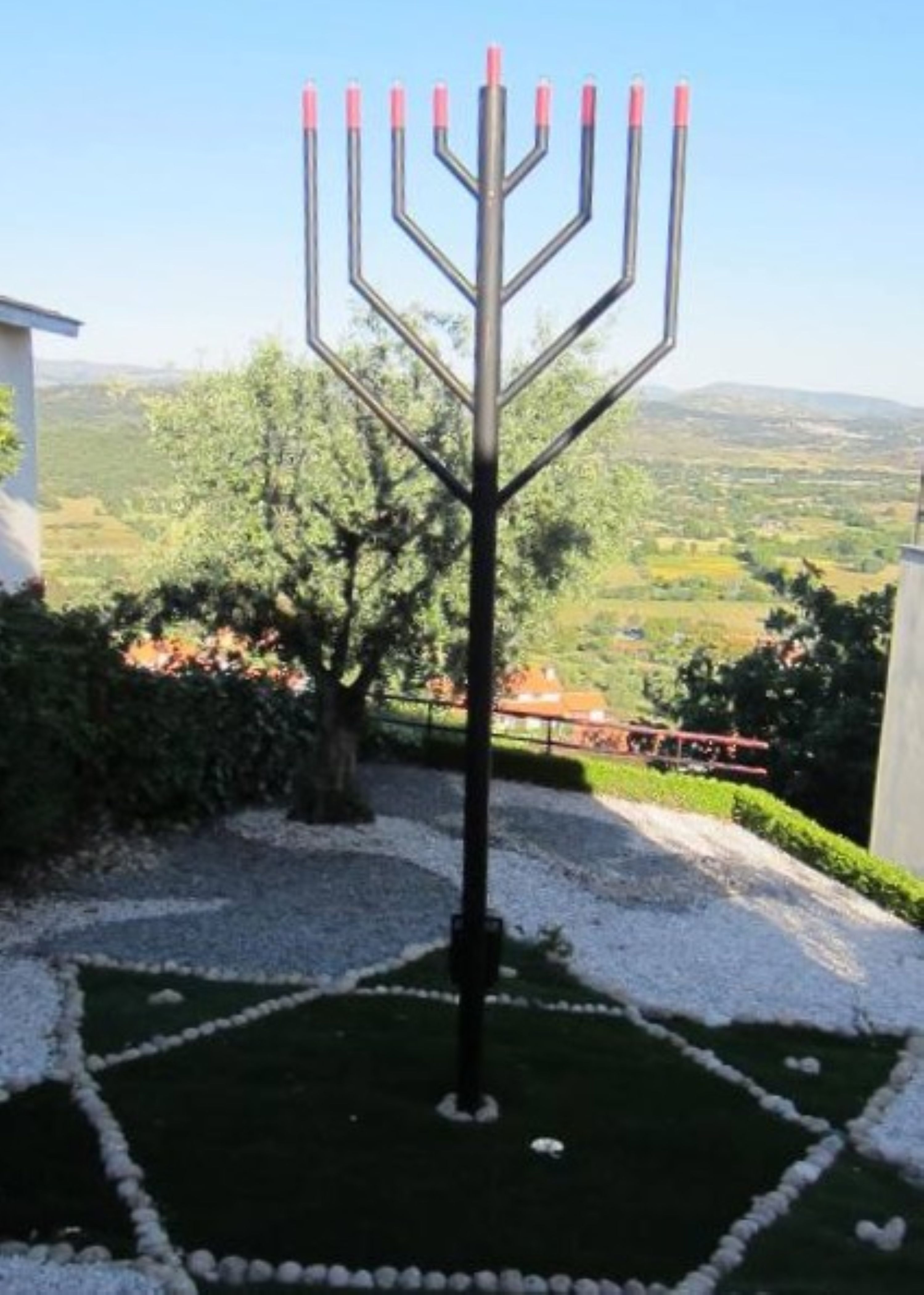
Belmonte: The Secret Jews

Belmonte: The Secret Jews, Portugal and the State of Israel

Bangkok, Thailand

July 21, 2013

“Without Portugal, the State of Israel would not exist.”

So declared an Israeli diplomat at the Shabbat dinner we both attended here in Bangkok, 

“Without Portugal, the State of Israel would not exist.”

Are you surprised to hear this statement?  I was.
Evora: My Lucky Day

Évora

Portugal

May 20, 2013

                                 My Lucky Day

 ... So after an unusual breakfast (you can squeeze your own fresh orange juice), I leave my freezing cold hotel room. (Last week it was quite warm but now the temperature has dropped and the hotel already adjusted the HVAC system for summer so there’s no heat from the damned vents.).

I dodge morning traffic across a busy avenue and walk through the stone gate in the protective medieval walls into the old section of town.  I stroll down a main road, and then, as is my custom, to a colorful side street (flower pots and laundry) Then, impulsively, I turn down a side street off the side street (maybe I’ll get lost, but who cares?) always trying to keep my sense of direction so I will arrive at the Praça do Giraldo, the cathedral and the Roman ruins on the hilltop up there, somewhere.

But then, hold the phone … stand by …wait just a minute … I stop dead in my tracks!

Óbidos: Castles

Óbidos

Estremadura

Portugal

May 18, 2013 

I’ll never forget the exact moment.  Noon, July 5, 2000. 

My first solo adventure.  Central Europe.  Slovakia.  From Košice to Spiš.  I was driving north through the countryside. 

And then, there it was!  To my right, on a hilltop brooding over the landscape.  Enormous.  Imposing.  Inspiring.  The nine hundred year old ruins.  Spišský hrad.  Spiš Castle. 

Out loud I spoke, “This is why I travel.  This is what I came to Europe to see!” * 

I had visited ancient European castles before: the Norman Canterbury Castle in Kent, England; the communal island of Mont Saint-Michel in Normandy, France; the grand Moorish Alhambra in Andalusia, Spain. 

But in Spiš, climbing, trudging, tramping, and sometimes gingerly making my way along the uneven rocky paths and among the ancient stones, the crumbling fortifications made a lasting impression.   

Over the years, I admit I usually didn’t go looking for castles.  Somehow, I just found them. 

And when I find them, as here in Óbidos, I trudge along the walls.  I climb as high as my ancient knees will allow.  This is why I travel.  To be inspired. 

The name "Óbidos" probably derives from the Latin term oppidum, meaning "citadel", or "fortified city".  Roman occupation of the area was confirmed by archaeological excavations, revealing the existence of a Roman city civitas near the hilltop on which the village and castle were established.  

This Roman settlement is most certainly the mysterious Eburobrittium,[1] cited by Pliny the Elder as situated between Collipo (near present-day Leiria) and Olisipo (Lisbon).  Archeological surveys determined the remains of a forumbathsand other Roman structures near the settlement. 

 * http://www.slovakia.com/castles/spis-castle/

**  http://en.wikipedia.org/wiki/%C3%93bidos,_Portugal


Spain: Salamanca to Madrid

Madrid

Spain 

Saturday 

November 30, 2002

Sunny and Cool

Dear Family and Friends, 

Saludos de España!

My guest room at the Sofitel Hotel is handsomely decorated with solid walnut furniture and gentle gold, brown, and mint green pastel accents. First Class all the way!

I am sipping an agua minerale con gas from the mini-bar.

Today I relax. I am tired from my travels.

My flight from Madrid to Miami on Saturday was oversold so I “volunteered” to fly tomorrow.  Business Class! I thought “volunteering” was unpaid. You would be shocked to know, in their desperation, how much the airline “paid" me. A three-figure voucher!  Plus, I am overnight in this four-star hotel, enjoying three lovely meals, all courtesy of American Airlines. Though I think I do have to pay for the mini-bar refreshments.

For today’s lunch, I choose a colorful salad of sliced codfish and chopped vegetables with that heavy Spanish olive oil I love. My second course is grilled swordfish with roasted potatoes and red peppers, y una cerveza también. Creamy fruit tart and café con leche for dessert.

I know my choices are a little redundant, but the alternatives are meat ravioli or roast pork.

After lunch, I take a walk and sit in a little park to think about the meaning of life. Then my siesta. Dinner is a Grand Buffet!

Lunch here begins at 2:00, and dinner no earlier than 9:00. Despite this traditional schedule, Spain is a thoroughly modern country.

The first sign of modernity and wealth I notice is that there are no motorbikes. Unlike other countries I have visited recently, it seems that in Spain every family has at least one car.

Secondly, almost everyone is, to put it politely, far from slim.

Finally, Spain has the Euro, clean streets, policemen distributing parking tickets and “boots,” efficient, slightly brusque service, and well-built, well-maintained, well-marked roads.

Oh yes, everyone smokes.

(I am in a social setting with a small group. One of the men is a soccer coach. He is quite proud that a few years ago he was invited to California to teach. Since he is an athletic type, I am comfortable commenting on my observations regarding large-scale smoking and its hazards. He totally agrees but adds, “Smoking cigarettes is a tradition in Mediterranean countries.

Just between you and me, I don't think this "tradition" comes from the Romans or the Moors, do you? Most likely from the Dukes and the Leggetts, don't you think? Anyway, not five minutes after our conversation ends, the soccer coach pops out with that universally recognized American symbol of I am cool—the red-and-white packetand lights up!)

On my way back from Extremadura and Salamanca to Madrid, I make two stops:

Ávila. A city surrounded by its original stone walls and towers that I can view from the hillside as I approach. Breathtaking.

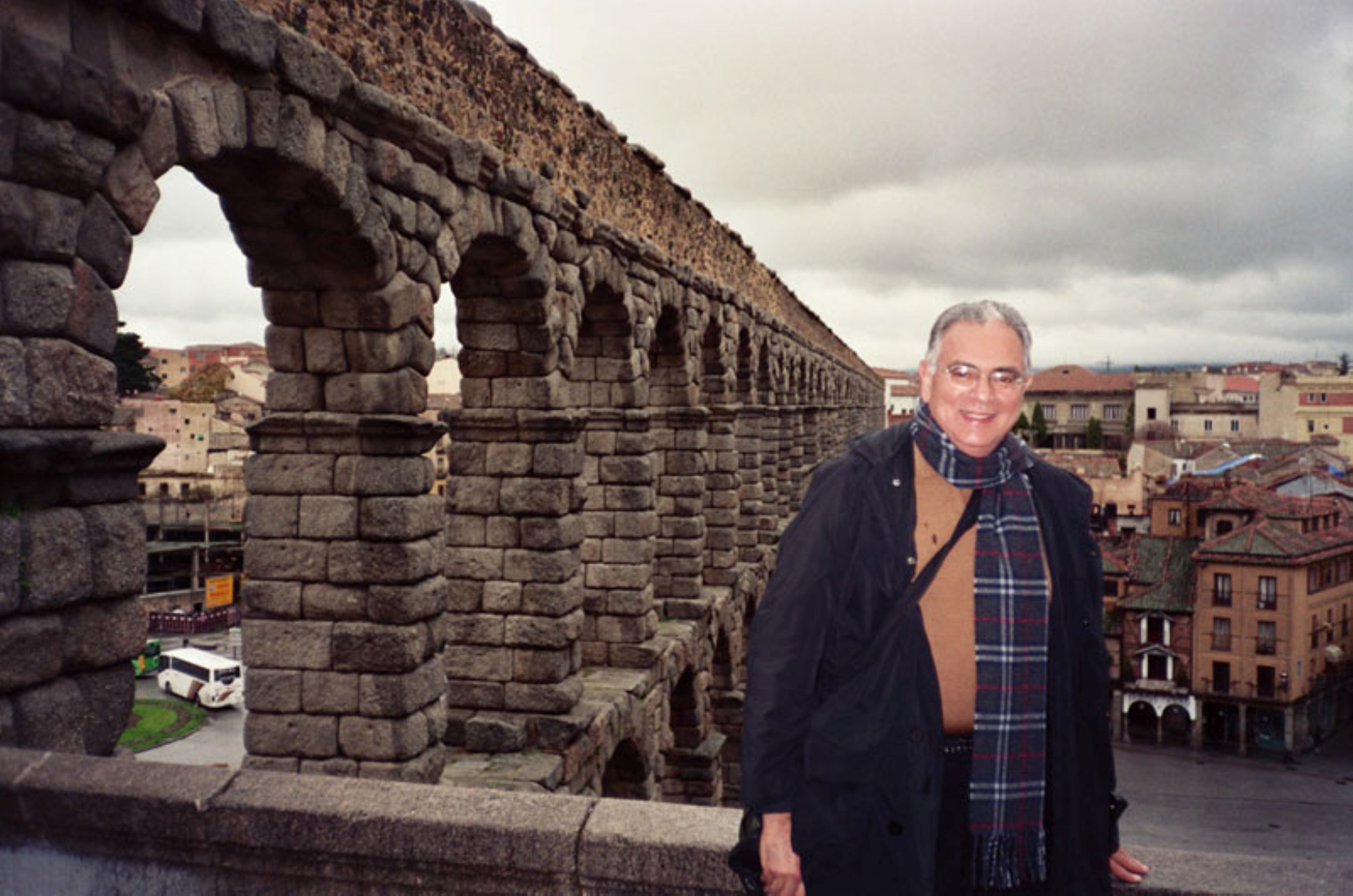
Finally, Segovia. A huge—I mean huge—Roman aqueduct in the heart of the city. A double layer of arches. Yes, I climb to the top.

This is Friday, the day after Thanksgiving.  I have to celebrate. I find the best restaurant in town. I order roast grouse in a tasty stew of little onions and mushrooms. A typical Thanksgiving leftover meal?

Now it is on to Madrid, return the car, spend the first night at an ordinary hotel, then “volunteer,” and enjoy a second night in luxury.

The trip was beautiful. “Rugged beauty” is not an exaggeration. Challenging mountain ranges and rolling farmlands dotted with monster boulders. It rained a lot, sin problema. I drove only about 1,200 kilometers (750 miles) in a week.

I will admit that this was the first trip I felt alone. The Spanish are very cool and straight-faced. They were always helpful yet seemed uninterested in meeting other people. There were few Americans, and I met no tourists from other European countries. Usually I do bond with someone, but not this time.

Al fin I am proud of myself. In these remote, off-the-regular-tourist-track towns, the local population spoke almost no English whatsoever. I was prepared with a little book of restaurant menu translations and a dictionary. But mostly I just “spoke” Spanish.

Miss Goldman, my teacher at Taft High School in the Bronx, would be horrified at my grammar.  But I do believe she would be pleased with my Castilian accent, adequate vocabulary, and overall comprehension. Gracias, Señorita Goldman. Vale.

Bueno mis amigos, I wish you a joyous Holiday Season and a Healthy New Year. And of course, Safe Travels.

Hasta la vista,

"Juan”


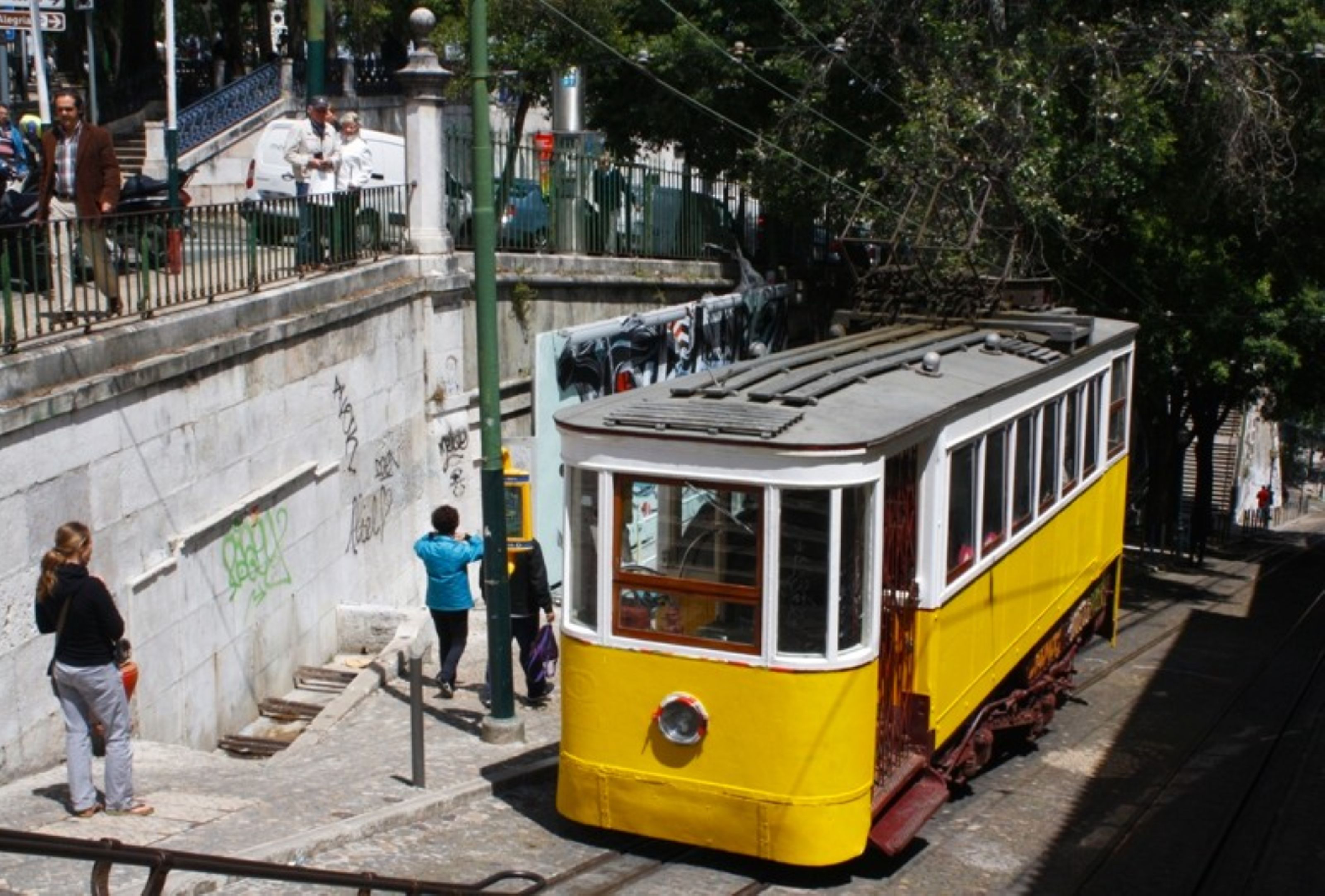
Lisbon: Navigating the Old and the New

Lisbon

Portuguese Republic

May 13, 2013 

Bom dia! 

Lisbon, the capital of Portugal, is the oldest city in Western Europe.  Lisbon predates London, and Paris, and Rome by hundreds of years. 

Even earlier, there is evidence of Neolithic settlement, Pre-Celts, Celts and Phoenicians. 

The Romans ventured to Portugal.  They were followed by Germanic tribes from Europe, Moors from North Africa, Crusaders from Britannia and the Spanish from over the mountains. 

Lisbon lies along the sheltered harbor of the broad Tagus River.  The Tagus and the other rivers in Portugal that flow from east to west into the Atlantic provided the embarkation points of adventure, trade, discovery, conquest and colonization.  

Sintra: Palace and Castle

Sintra

Portugal

May 17, 2013

Hello,

My cousin Ofer Lauer told me that always he reads my travel letters, but only “if they are short.”

So my dear cousin, here’s a short one:

From Lisbon, it’s an easy daytrip to Sintra, a UNESCO World Heritage Site.

I wandered the narrow and hilly streets of this medieval town.

I lingered in the courtyard of the Sintra Palace. 

Despite the clouds, the fog, the chill and the miserable rain that fell intermittently, I climbed the walls of the Castle of the Moors, and made it to the top, almost!

What’s ahead for me in Portugal? 

More chill? More rain? Hope not.

More castles? Hope so.

Jan


Pages